

Tag Archives for " pressure treated wood deck "
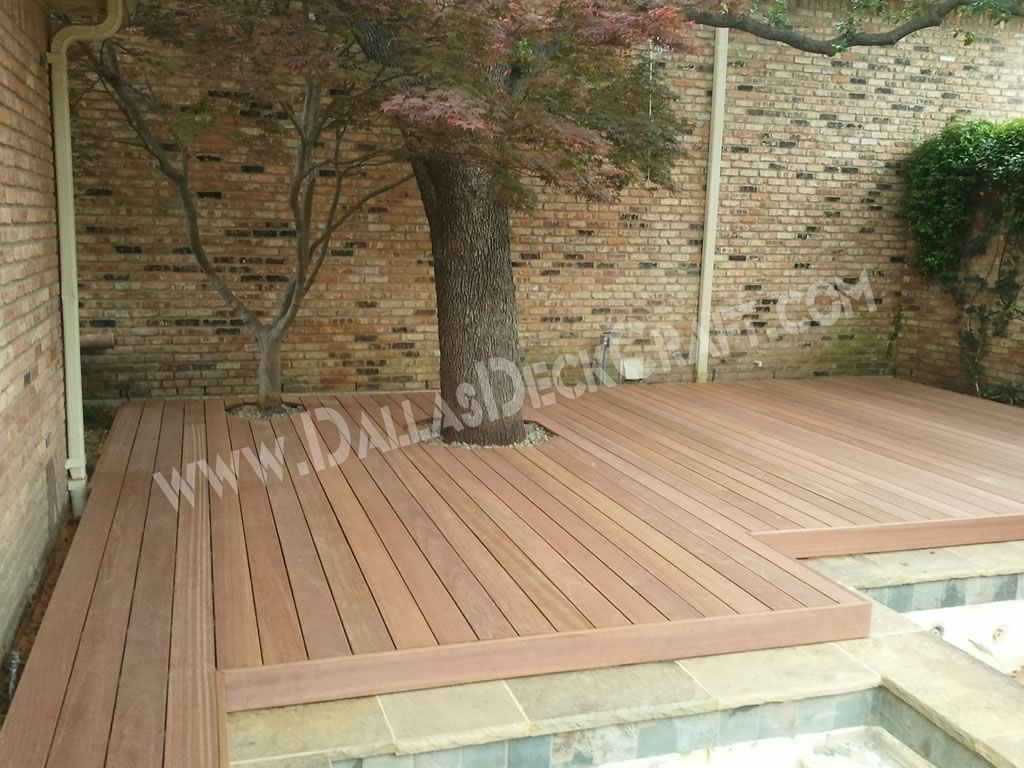
Abaco Decking
Getting to Know Abaco Decking: The Elegant Tropical Hardwood
Abaco Decking – Durable, Beautiful, Long-Lasting and Low Maintenance
Abaco decking is an elegant step up in appearance and durability from pressure treated wood and other decking materials. This contemporary European design includes a natural composition which dissipates heat quickly. This means that your deck is cooler on your feet.
Abaco decking is also slip resistant, and can be connected one board to the next in such a way that your fasteners are hidden. This provides a nice high quality look, while also allowing a design which provides natural contraction and expansion without wear and tear.
Abaco Decking Delivers Multiple Benefits with a Competitive Price Tag
Comparatively, the tropical abaco product is competitively priced. Other hardwoods like ipe require a larger investment than abaco. And that same rich, deep mahogany color that ipe delivers is almost perfectly replicated with abaco.
Price and appearance aside, no matter what you spend you expect a long-lasting, low-to-no-maintenance deck. You also do not want to be replacing and repairing your deck every few years because it has rotted, decayed or been eaten alive from the inside out by bugs and insects.
That is exactly what you get with abaco decking. This hardwood has an amazing natural ability to resist rot. It is impervious to termites and other insects. Decay, twisting, splintering and cracking simply do not occur.
As far as strength and durability goes, abaco is incredibly resilient. Simply put, abaco decking makes for a wonderful, sturdy, safe and beautiful outdoor living experience that lasts for years.
Abaco Decking is Friendly to the Environment
The last few decades, homeowners around the world have become more environmentally conscious. If taking care of the planet is important to you, abaco decking meshes perfectly with your belief system. Since this is an all-natural wood, it never needs to be chemically treated.
That means while you are enjoying your family and friends, creating wonderful lifetime memories on your beautiful abaco deck, you are acting in an environmentally responsible manner as well.
Abaco Decking Delivers an Excellent Fire Rating
And abaco tropical hardwoods are dried in a kiln for exterior use. This special process, combined with the natural qualities of this beautiful, long-lasting hardwood, leaves abaco decking with a better fire rating than cedar and redwood. Virtually maintenance free when compared to pressure treated decking, abaco offers many benefits to you, the homeowner dreaming of creating the perfect outdoor living experience.
DallasDeckCraft.com has been helping satisfied home owners create timeless memories for 35 years. If you live in the Dallas, Texas Metropolitan area, or Collin or Rockwall counties, give us a call today. We can answer any questions you may have about abaco decking, and provide you with an attractive, quote at your convenience. We would love to add you to the long list of happy clients we have created unique, one-of-a-kind outdoor living experiences for, so give us a call today at 214-384-4267 and we can get started on your abaco decking project as soon as possible.

The Definitive Guide to Ipe Decking

What is Ipe Decking?
For the discerning Dallas, Rockwall and Collin county homeowner and the perceptive deck builder, ipe decking is the best choice. Why? As a finished product, it is rich, resilient, and beautiful. As a material, ipe is naturally resistant to rot, abrasion, insects, molds and extreme weather. It is also flame-resistant, and it does not float. This beautiful exotic lumber is up to 5 times harder and 2 times denser than other hardwoods, and yes, it is harder than nails.
It is a primary choice for builders and interior designers and you will find this tropical hardwood in first-class commercial projects and upscale homes all over the world. In fact, that’s ipe hardwood you see outside the Treasure Island Hotel in Las Vegas, the famous Atlantic City Boardwalk and also the boardwalks of Disney World and Coney Island.
Ipe: A Closer Look
Ipe (pronounced as ee-pay) is commonly found in South and Central America, specifically in the Brazilian rainforests. These trees can grow up to 150 feet tall with a diameter of 6 inches. It is also called as Brazilian walnut and ironwood (in reference to its toughness).
Ipe wood has the same A-1 fire rating as steel and concrete, which means that it is highly flame-resistant compared to other woods. It has also been awarded the highest decay resistance rating of High 50+ Years, although the material can actually last longer. It is ideal for outdoor decking especially in areas with extreme weather conditions such as Dallas, Texas.
Benefits of Using Ipe Decking
Aside from the facts stated above, here are some more reasons why deck construction professionals choose ipe wood for outdoor decking.
- Resistant to sliver, splinters and scratches
- Resistant to termites, fungi, and decay
- Slip-resistant
- Very low maintenance
- Fire-resistant
- Can withstand extreme weather conditions such as those seen in Dallas, Texas
- Highly resilient (can last more than half a century)
- Ipe materials have a distinctly beautiful coloration and graining that ranges from light olive brown to dark chocolate brown
Building with Ipe
Aside from decking, there are close to limitless possibilities for which ipe can be used. Some of these are:
- Boardwalks
- Porches
- Furniture
- Flooring
- Gazebos
- Fences
- Cabinetry
- Siding
How to Work with Ipe
While ipe presents so many benefits when used for decking, many builders find it quite challenging to work with. With the right tools, however, ipe decking wood is a great material to use.
Ipe is like redwood, it has natural oils that keep insects out and it is ideal because it is highly resistant to molds, mildew and decay. However, ipe also has a high tannin content that makes it difficult to paint or finish. It is not as malleable as other woods, either, so it is not suitable for intricate woodworking.
Here are some tips to help a deck builder get the most out of ipe.
Application—air dried ipe wood is best for outdoor use. For indoor projects, kiln-dried ipe is better to avoid cracking or warping.
Drilling—it is highly recommended that you use high-quality drill bits to drill into the wood. Ipe is very hard, so you would need to pre-drill before attaching pieces together.
Cutting—to prevent splinters when cutting, it is best to use carbide saw blades.
Installation—use stainless steel screws or hidden fasteners when attaching pieces together. Installation is a vital part in making sure that decking problems are avoided. Ensure that the deck boards are properly straightened and the right fastening systems are used. And don’t rush the process!
Finishing—because this kind of wood has an abundance of natural oils, water and oil based finishing won’t produce the best results. It is therefore recommended that you test apply different products on some sample boards to achieve the desired results.
Whether you are a deck builder or a homeowner, you will surely appreciate the many benefits of using ipe decking wood. It is durable, resilient, beautiful, and meant to last for generations.
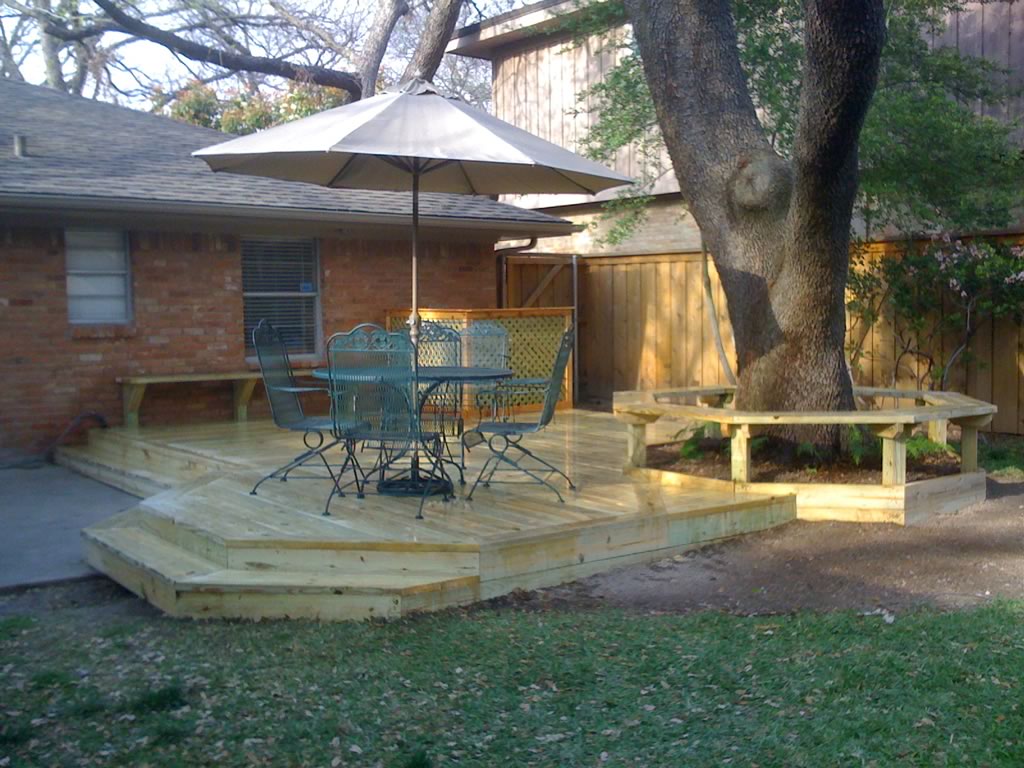
The Definitive Guide to Pressure-Treated Decking

Why Pressure-Treated Decking?
Pressure-treated decking is very popular and can be found at many homes in the Dallas Metro area, but many of us know very little about this favored outdoor building material. Read on and be informed on everything that you need to know about pressure-treated wood deck and whether it should be your choice for your next decking project.
Pressure-treated decks are used in millions of homes all over the United States and has been around for more than 50 years in the building industry. It is sold in most lumber outlets in the country and is a favorite among builders and homeowners alike for its features and benefits.
Pressure-Treated Wood: A Closer Look at the Facts
According to statistics, more than 75% of all the decks in the US are built partially or entirely with pressure-treated wood. They are used for beams, posts and joists mainly for their structural strength and it’s natural ability to endure against ground-contact deterioration.
Pressure-treated decking uses a softwood lumber material—usually southern yellow pine decking—that has been chemically treated to withstand decay, termites and rot. It has a natural wood appearance, resilient and highly available. Being very economical, it is also the best choice for homeowners who are looking to build decks for less.
It is called “pressure treated” because of the process it undergoes before it is sold. The pine boards are placed into huge pressurized cylindrical tanks called “retort”. These chambers are sealed airtight and they contain chemical preservatives that are then forced into the very fiber of the wood under extreme pressure, resulting to exterior-grade wooden boards that are ideal for deck building and other woodworking projects.
Benefits of Pressure-Treated Decking
Pressure-treated wood deck is ideal for areas where the weather can be unpredictable and harsh, such as parts of Texas like Plano. Properly treated wood is a much less expensive option and offers a lot of benefits including a really long life span, to the tune of 40 years or more.
Here are some of the advantages to using pressure-treated decking.
- Longevity—treated wood is highly resistant to damage caused by fungal decay, borers, and rot. This is why many manufacturers offer warranties of up to 40 years for pressure-treated wood products.
- Grade Varieties—pressure-treated decking is available in a wide variety of lumber grades to suit the user’s needs, such as knot-free grades and close-grained grades. The lumber is distinguished into grades by checking the knots, grain angle, decay, damage warp and wane of the wood. The grades will let the user know if it is structurally sound for a particular application or environment.
- Low Maintenance—unlike its exotic counterparts, pressure-treated wood decking requires a little more maintenance. As with any other deck, regular cleaning is very important. It is important to note that while the wood has chemicals that will protect it from rot and termites, moisture damage is still slightly possible. To prevent this, the deck should be maintained with an annual coating of high-quality weather sealant with water repellant and a ultraviolet block to help retain its appearance and longevity. Semi-transparent stain can be included with the above and really brings out the beautiful characteristics of treated pine.
- Environmentally Friendly—you won’t have to worry about depleting the environment with your option, because pressure-treated decking is environmentally friendly and comes from renewable, plentiful and fast-growing types of wood that are grown on managed timberlands. The preservatives used are typically manufactured from EPA-approved chemicals.
- Versatile and Pliant—working with pressure-treated decking is easier than exotic wood. It also has a unique cellular structure that exceptionally holds stains, paints and sealants after an initial weathering period of 4-6 weeks to allow the wood to dry so that it will absorb the sealant better and therefore last longer.
Working with Pressure-Treated Decking
First off, to make sure that your deck is built with the right kind of pressure-treated wood, you should check the label or stamp of the boards and verify the chemical retention level. The higher the number, the more resistant the wood will be against rot and termites.
There is a recommended retention level for each environment and application. For instance, the UC3B category with retention levels of 0.25–0.40 is ideal for decking that is intended for an environment where it will be exposed to prolonged wetting and different weather cycles.
In building a pressure-treated wood deck, lumber manufacturers highly recommend using only hot-dipped galvanized screws, nails, bolts, connectors and anchors. It is also important to remember that wood treatments cause corrosion to aluminum components.
The wood is treated with chemicals, so the builder or homeowner is reminded to wear gloves at work, and to thoroughly wash up before drinking or eating. Safety goggles and a dust mask should also be worn when drilling, cutting or sanding the wood.
You should never cut pressure-treated lumber in an enclosed space, only outdoors, and you should never burn it.
Before painting or staining, pressure-treated decking must be allowed to dry through. The best way to test this is to sprinkle water on the surface of the wood. If it beads up, this means that the wood is still too wet and must be dried further before a weather sealant/stain is applied. If the water is absorbed easily, it means that the wood is ready.